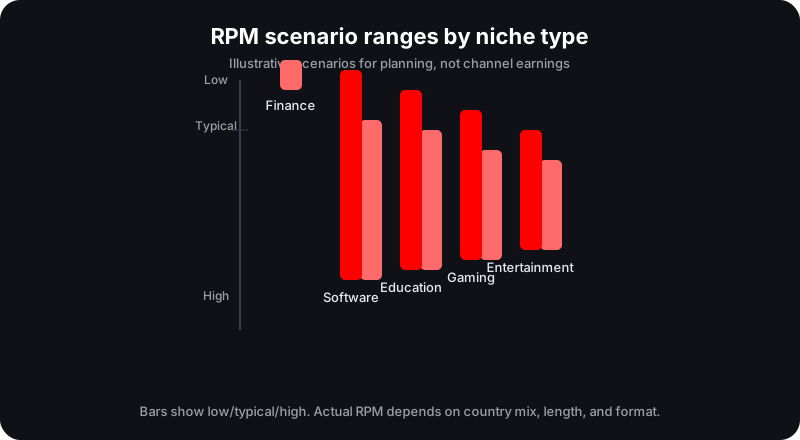
RPM by niche is useful, but it is also easy to misuse. A finance channel may earn more per 1,000 views than a gaming channel because advertisers can sell higher-value products. But a gaming channel with loyal fans, sponsorships, and strong volume can still build a better business than a generic finance channel with weak trust.
The best use of RPM ranges is scenario planning. They help estimate whether a niche has commercial intent, not whether a channel will succeed.
What Makes a Niche High RPM?
Advertisers pay more when viewers are close to valuable decisions: buying software, choosing insurance, investing, starting a business, selecting a school, or solving an expensive problem. That is why finance, business software, legal education, real estate, and B2B topics often command stronger ad demand.
Entertainment, memes, broad lifestyle, and some gaming formats often rely more on scale, sponsorships, merch, or community monetization. They are not "bad" niches. They simply use a different business model.
| Niche type | Why advertisers care | Creator risk |
|---|
| Finance and investing | High customer value | Needs accuracy, trust, compliance awareness |
| Software tutorials | Clear buyer intent | Tools change quickly; updates matter |
| Education and careers | Course, school, and career spend | Needs credible expertise |
| Gaming | Large passionate audience | Lower ad rates; high competition |
| Entertainment | Broad reach | Revenue depends heavily on volume and brand fit |
Real YouTube Example Patterns
A channel like The Plain Bagel teaches finance concepts with trust and specificity, which attracts a different advertiser environment from a broad reaction channel. A software educator explaining Excel or AI workflows can monetize through ads, affiliate tools, templates, and consulting. A science channel like Kurzgesagt or Veritasium may not fit a simple RPM table because production quality, sponsorship demand, and brand safety also matter.
Why Public RPM Tables Are Dangerous
Many RPM lists imply exact numbers. That is misleading. Actual RPM depends on country mix, video length, ad suitability, viewer age, seasonality, monetized playback rate, Shorts share, and YouTube Premium. A public article can teach ranges and drivers, but it should not promise a specific channel's private earnings.
How to Choose a Niche Responsibly
Score each niche across demand, access, repeatability, monetization fit, and creator fit. A high-RPM niche with no creator credibility is fragile. A lower-RPM niche with deep expertise and loyal viewers may monetize better through sponsors and products.
The niche validation framework provides a full scoring model. Use Niche Insights to test whether public demand exists before committing.
Method for RPM Estimates
Norlytics starts with a niche assumption, then adjusts for likely country, content format, channel scale, and public view patterns. Because private analytics are unavailable, the tool returns a range and explains the limits. That is more honest than a single "this channel earns exactly X" claim.
Common Mistakes
- Choosing a niche only because a table says it has high RPM.
- Ignoring whether you can publish 50 useful videos in that niche.
- Using US finance RPM for a global entertainment audience.
- Forgetting that sponsorships and products can exceed AdSense.
- Publishing thin affiliate content without expertise or testing.
Build a Revenue Stack, Not Just an RPM Estimate
Ad RPM is only one layer. A complete revenue stack may include Watch Page ads, Shorts revenue, affiliate links, sponsorships, memberships, courses, templates, consulting, licensing, or events. Different niches favor different layers. A software tutorial channel may earn from affiliate links and templates. A fitness channel may earn from coaching or programs. A science channel may rely more on sponsorships and audience trust.
That is why the best niche decision starts with viewer problems. What does the viewer need after watching? A product? A checklist? A deeper course? A tool? A community? If there is no next step, the niche may still work as media, but the creator should not assume high RPM will carry the whole business.
Update Frequency Matters
Some high-RPM niches decay quickly. Software tutorials, AI tools, tax rules, and platform policies need updates because viewers and search engines can detect stale advice. Evergreen entertainment or storytelling may age differently. When choosing a niche, include maintenance cost in the decision. A topic that pays well but requires constant updates may be harder than a lower-RPM topic where your best videos stay useful for years.
Validate RPM and demand together
Use Niche Insights for demand and Creator Dashboard for public channel benchmarks before choosing a revenue strategy.
Open Niche InsightsFrequently Asked Questions
What is a good YouTube RPM?
A good RPM depends on niche, country, video format, and monetized views. Compare against similar channels and your own history rather than a universal number.
Are finance channels always best?
No. Finance can monetize well, but it requires trust, accuracy, and audience fit. A creator without credibility may struggle.
Can Norlytics know real RPM?
No public tool can know private YouTube Studio RPM. Norlytics estimates ranges from public signals and assumptions.
Sources and Methodology
This guide combines public YouTube Data API signals, Norlytics tool methodology, manual review patterns used by creators and sponsors, and official YouTube or Google policy documentation where rules are involved.
Related Norlytics resources
 Norlytics