YouTube Shorts can create reach quickly, but Shorts monetization works differently from long-form Watch Page ads. A creator should not estimate Shorts revenue by applying long-form RPM to short videos. Shorts use a pooled revenue model, eligible engaged views, music licensing adjustments, and a different revenue share.
According to YouTube's Shorts monetization policies, monetizing creators who accept the Shorts Monetization Module can earn from ads viewed between videos in the Shorts Feed. YouTube allocates revenue through a Creator Pool and monetizing creators keep 45% of their allocated revenue share. This is different from traditional long-form ad monetization.
Eligibility and Requirements
For full YPP ad revenue sharing, channels generally need 1,000 subscribers plus either 4,000 valid public watch hours in the last 12 months or 10 million valid public Shorts views in the last 90 days. YouTube also reviews the channel for policy compliance, so hitting numbers does not guarantee approval.
Why Shorts RPM Is Usually Lower
Shorts ads are shown between videos, not inside every individual Short. Many views are rapid, global, and less commercially targeted than long-form search-driven videos. That is why creators often treat Shorts as top-of-funnel reach rather than the entire revenue model.
| Format | Revenue model | Best use |
|---|
| Shorts | Shorts Feed ad pool and eligible engaged views | Discovery, testing ideas, audience growth |
| Long-form | Watch Page ads and YouTube Premium | Depth, search demand, higher RPM topics |
| Live streams | Ads, Supers, memberships when eligible | Community and real-time engagement |
| Community/products | Memberships, affiliates, sponsors | Monetizing trust beyond ads |
Hybrid Strategy
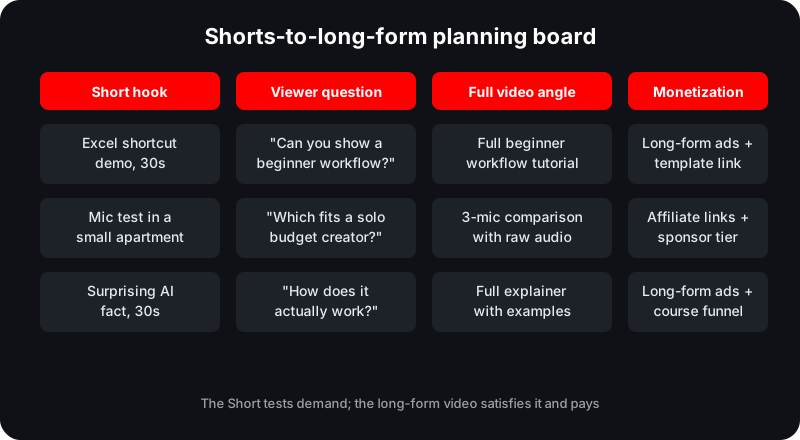
The strongest creator strategy often uses Shorts to test hooks and identify demand, then turns winning ideas into deeper long-form videos. For example, a cooking creator might post Shorts testing three quick meal ideas. The one with the strongest saves, comments, and repeat questions can become a full tutorial, shopping list, and meal plan video.
Educational channels can do the same. A science creator might use Shorts to test a surprising fact, then publish a full explainer once the audience shows curiosity. A software creator can post a 30-second workflow, then link to a full tutorial or template.
What Counts as a Good Shorts Signal?
Do not only look at views. Comments that ask for a tutorial, saves, shares, follower conversion, and repeatable formats matter more. A Short with fewer views but strong buyer intent can be more valuable than a viral joke that does not fit the channel. If the same viewer repeatedly returns across a row of Shorts, that pattern points to a repeatable format worth testing as a full video, because repeat watches imply the topic can hold attention longer than a single 30-second loop.
Common Mistakes
- Estimating Shorts earnings with long-form RPM.
- Posting unrelated Shorts that confuse the channel's audience.
- Ignoring YouTube's rules on non-original and reused content.
- Failing to convert Shorts viewers into deeper videos, email, products, or community.
- Judging the channel only by viral outliers.
Public Analysis Workflow
Use the Creator Dashboard to compare recent uploads, then manually separate Shorts from long-form videos. Review whether Shorts are bringing viewers toward the channel's main topics or creating random reach. If the channel has strong Shorts but weak long-form demand, the revenue strategy may need sponsors, products, or a clearer funnel.
How to Turn Shorts Into a Search Asset
Shorts are not only for the Shorts feed. A strong Short can reveal language that viewers use when asking for help. Save the exact comment phrases, objections, and repeat questions. Those phrases can become long-form titles, FAQ sections, community posts, and blog content. This is how short-form testing can improve search-based videos instead of distracting from them.
For example, if a Short about "one Excel shortcut I use every day" gets many comments asking for a full beginner workflow, the next long-form video should not be another random shortcut. It should be a structured tutorial that solves the broader workflow problem. The Short discovered demand; the long-form video satisfies it.
Brand and Sponsor Fit
Shorts-heavy channels can still attract sponsors, but the pitch should match the format. A sponsor may want a fast demonstration, a creator-use case, or a bundle with a long-form integration. Creators should be honest about expected delivery because Shorts views can be volatile. Recent median views and audience fit matter more than one viral spike.
Compare Shorts and long-form public signals
Use Creator Dashboard to review upload mix, recent views, top videos, and repeatable public patterns.
Open Creator DashboardFrequently Asked Questions
Do Shorts views count toward 4,000 public watch hours?
YouTube says public watch hours from Shorts views in the Shorts Feed do not count toward the 4,000 public watch hours threshold.
Can Shorts qualify a channel for YPP?
Yes, one path is 1,000 subscribers plus 10 million valid public Shorts views in the last 90 days, subject to policy review.
Should creators make Shorts or long-form videos?
Often both. Shorts can test demand and build reach, while long-form videos usually provide depth, search value, and stronger monetization opportunities.
Sources and Methodology
This guide combines public YouTube Data API signals, Norlytics tool methodology, manual review patterns used by creators and sponsors, and official YouTube or Google policy documentation where rules are involved.
Related Norlytics resources
 Norlytics