Channel GrowthLast updated August 5, 2026 · 7 min read
How to Find YouTube Video Ideas That Get Views: A Data-Backed Process for 2026
The demand for video topics already exists inside YouTube itself — in autocomplete, related searches, comments, and public channel data. Here is a repeatable process for turning those signals into a ranked list of validated ideas.
The fastest way to stop guessing at video topics is to stop guessing entirely. The demand for ideas already exists inside YouTube itself — in autocomplete, in related searches, in the comments under top-ranking videos, and in the public data of channels that are winning. This guide turns those raw materials into a repeatable process: collect signals, mine the gaps, benchmark with public data, then validate every idea against a simple test before you spend a week producing it.
Start Where Demand Already Exists
YouTube search autocomplete suggestions are real, typed queries. Every phrase in that dropdown represents someone who searched for it, which makes autocomplete a free source of demand data. Start with a broad term in your niche and collect the completions; they reveal the exact language viewers use and the specific problems they are trying to solve.
The related-searches list at the bottom of a results page adds another layer. Those phrases reveal additional angles that autocomplete misses, and stringing them together shows the cluster of topics around any core term. Two lists from a single search session can yield a dozen legitimate idea candidates before you open a single competitor video.
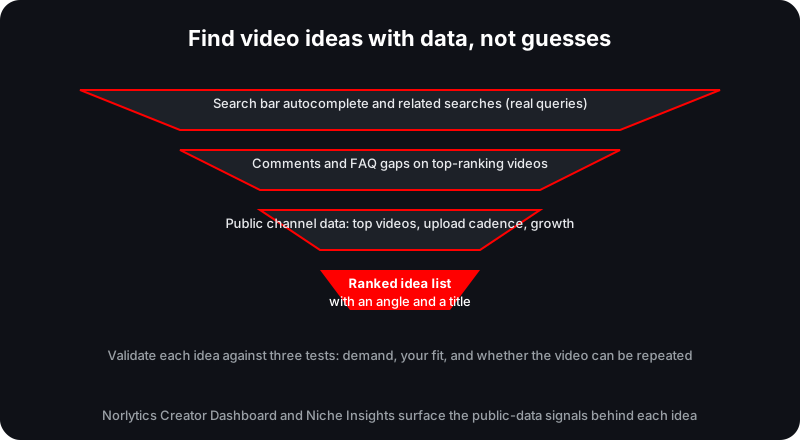
The idea research funnel: autocomplete and related searches surface demand, comments and FAQ gaps expose missing answers, and public channel data benchmarks the ceiling before ideas are ranked.
Mine the Gaps Competitors Leave Open
The comments and FAQ sections on top-ranking videos expose questions the existing videos do not fully answer. When several viewers ask the same follow-up, that is a gap — and gaps are idea opportunities. Read the top of a successful video's comment section and you will often find the seed of a better version of the same topic.
Analyzing top-ranking videos' titles and descriptions shows which words and angles the market already rewards. Notice the patterns across several winners rather than a single outlier: the phrasing, the promise, the format. The goal is not to copy, but to understand what the algorithm and the audience have already voted for, so your version starts from a proven foundation.
Benchmark With Public Channel Data
Public channel data turns speculation into estimates. Upload cadence, average views, top videos, and growth velocity let you benchmark an idea's realistic ceiling and see what a competitor is actually winning with. A competitor's top video at 500,000 views tells you the topic can travel; an average sitting at 4,000 tells you how hard it is to repeat. The channel audit checklist walks through the exact signals to collect, and the profitable niches guide shows how to rank whole topic areas against each other.
You can gather this data yourself from any public channel, and the Niche Insights tool does the heavy lifting across whole topics at once. The point of the benchmark is a realistic ceiling: an idea worth making is one where the ceiling is high enough to matter and the current field leaves a gap you can fill.
The Three-Test Validation Framework
Once you have a shortlist, validate every idea with three tests. Demand: are people already searching for and watching this? Fit: can you deliver it better, with authority and consistency? Repeatability: can this become a series, or does it only work once? A fourth test strengthens the list: monetization, whether the audience for the idea can support ads, affiliates, products, or sponsors.
Test
Question it answers
What passing looks like
Demand
Are people already searching and watching?
Related searches and top videos exist
Fit
Can you deliver it better and consistently?
You can add authority and a repeatable angle
Repeatability
Can it become a series?
A recognizable format you can refresh
Monetization
Can the audience support revenue?
Ads, affiliates, products, or sponsors fit
The three tests overlap with the broader discipline of choosing where to compete. The niche validation framework applies the same logic at the level of whole topics rather than single videos, and it is worth reading alongside this list before you commit to a series.
A validated idea in practice
A channel notices autocomplete suggesting "why are videos blurry on YouTube" and finds three top-ranking videos with dated answers. The comments show a recurring complaint: the upload quality settings changed. Demand exists, the channel can explain it clearly, and a weekly "why is my video X" series is repeatable. The idea passes all three tests and the monetization test, so it goes on the ranked list.
An idea is not validated because it sounds good. It is validated because the search data, the gaps, and the benchmarks agree — and because you can deliver it better and repeat it.
Idea Formats With Consistent Demand
Some formats reliably produce demand because they answer recurring questions. Strong categories include how-to tutorials, comparisons, mistakes-to-avoid lists, case studies, myth debunking, and "before you start" guides. Each one maps to a stage of the viewer's decision process, which is why the searches keep coming year after year.
Within each format, the angle is the differentiator. A mistakes-to-avoid video outperforms a general tutorial when it names the specific failures viewers fear, and a comparison earns its clicks when both options are real contenders rather than strawmen. The format gives structure; the angle gives a reason to click.
A Repeatable Format Beats a One-Off Hit
A repeatable format matters more than a single clever upload, because a binge path converts one view into a session. When viewers recognize the format, the title, and the thumbnail style, the next upload becomes part of a habit rather than a fresh decision. The watch time strategy covers why sessions matter; here the lesson is that idea generation and session design are the same project.
Work the list continuously. Every upload returns new comment threads, new related searches, and new gaps, which feed the next batch of ideas. A standing pipeline of validated ideas beats a frantic search for next week's topic.
Your Video Idea Checklist
Collect autocomplete and related searches for every core topic.
Read comments and FAQ sections on top-ranking videos for gaps.
Benchmark a competitor's average views and top videos.
Run every idea through demand, fit, and repeatability.
Add the monetization test before committing to a series.
Pick one strong format and refresh it weekly.
Rank the list and start with the highest-demand gap.
Turn the List Into a Publishing Plan
The final step is prioritization. Rank your validated ideas by demand and by how directly they fill a visible gap, then schedule them in a sequence that builds a series rather than a set of unrelated uploads. Public tools make the benchmark repeatable: the Niche Insights tool shows demand and growth context across topics, and the Creator Dashboard tracks whether the format is paying off.
Validate ideas before you film
Use Niche Insights to see demand, competition, and growth context across topics before you commit production time to an idea.
Where do I find video ideas people actually search for?
YouTube search autocomplete shows real, typed queries, and the related-searches list at the bottom of results pages reveals additional phrases. Both are free sources of demand data.
How do I know if a video idea is worth making?
Run it through three tests: demand, whether people already search for and watch it; fit, whether you can deliver it better with authority and consistency; and repeatability, whether it can become a series. A monetization test, whether the audience can support ads, affiliates, products, or sponsors, strengthens the list.
What types of videos consistently get views?
Formats with steady demand include how-to tutorials, comparisons, mistakes-to-avoid lists, case studies, myth debunking, and before-you-start guides. Each maps to a recurring stage of the viewer's decision process.
Why does a repeatable format matter more than a one-off video?
A repeatable format creates a binge path that converts one view into a session, which matters for ranking and for habit. A single clever upload does not compound; a recognizable series does.
Sources and Methodology
This guide synthesizes YouTube's official documentation and public reporting. Figures that vary by audience, region, or advertiser demand are estimates, not guarantees.
 Norlytics